
Sociologists Wilensky and Lebeaux (1958) distinguished two forms of social welfare in their seminal work on the impact of industrialization on society. Institutional systems normalize care and support across the human lifespan, from birth to dignified death. Care is built into the fabric of society – it is institutionalized in our societal systems. Residual forms of social welfare, however, expect individuals and families to care for themselves. Only when individuals and their familial networks fail should institutional social welfare kick in. Aligned with the value placed on individualism, the U.S. has a residual system of social welfare.
The distinction has been an underpinning of almost every class I’ve taught as a social work faculty member, hoping that our next social workers understand the water they are swimming in and how it may shape their clients, their communities, and their practice. It also informs my work at the UNC Charlotte Urban Institute and the Charlotte Regional Data Trust – our push to provide enduring community data infrastructure when data and research on how people are doing are fragmented by the patchwork of our social safety net and intersecting sectors.
And so, jumping on a plane for the Gambrell Expedition, I was pretty sure I knew what I would see – institutional social welfare systems at work that would stand in contrast to our fragmented “system” in the states. As Olivia referenced in a previous Gambrell blog – I arrived with assumptions. I was very excited and I thought I knew what I would see.
And, to some extent, I wasn’t wrong. We saw variations of institutional social welfare systems in Estonia, Finland and Denmark. All characterized by engrained, connective threads that tie people and institutions together across the life course. The features of these systems were striking, even if I knew of them ahead of time – childcare, early childhood through higher education, and healthcare that are free or intentionally affordable. Supports that are available at vulnerable times of life – generous family leave to new parents, healthcare and housing that support aging parents, but also systems designed for the everyday and overall wellbeing – access to preventative, whole health care, housing connected to transportation, transportation connected to gathering and green spaces. The differences between these features and what I have trained students to expect as they navigate our system are stark. Assumption confirmed.
But what I didn’t expect was the mirror the experience offered for me – a reflection of how my sense of humanity, community, possibility, and hope have been almost unperceptively (to me) shaped by the social welfare assumptions of the context I inhabit. I have come to expect fragmentation and its consequences – in data, in access, in eligibility, in funding, in programs and in services. I am affected, but I’m rarely surprised by the outcomes of our residual system.
But seeing another set of decisions about society and social welfare in action, I was surprised to recognize the degree to which expected outcomes in our system have limited how I think of interventions and what’s possible. I have become conditioned to think of human and social welfare residually – as if people can only live and exist within the limits of what our system provides them.
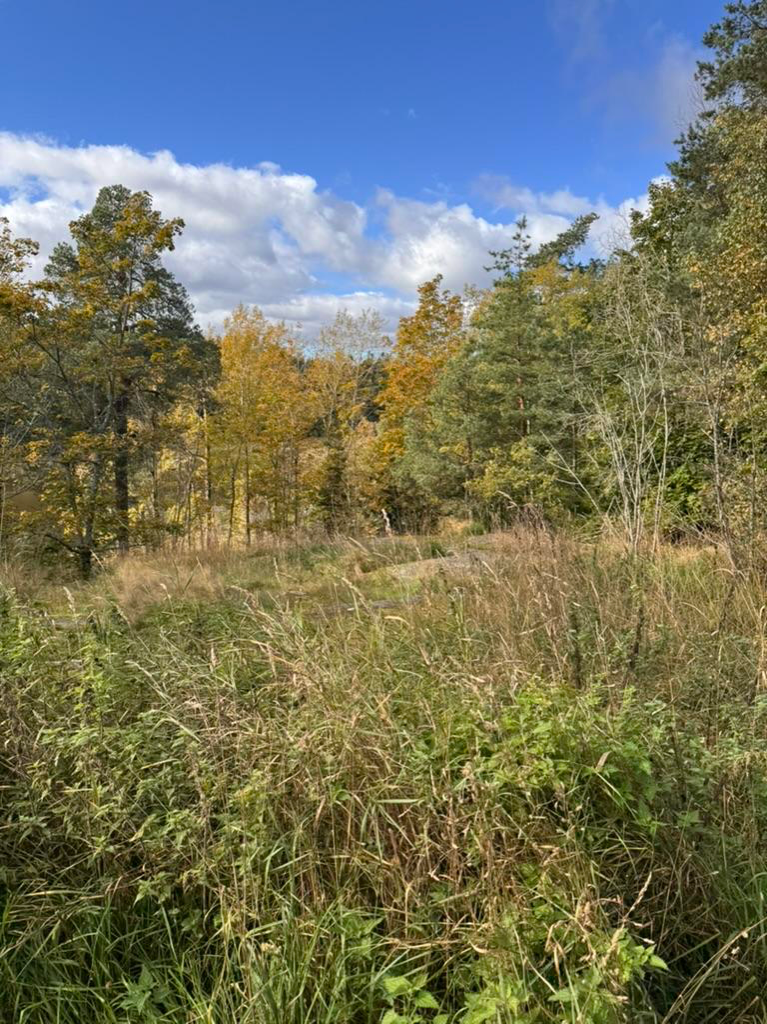
In Finland, the social housing we visited was located – intentionally – beside parks and greenways. And typically, the housing includes access to a sauna, of deep historic and cultural importance to the Finnish (i.e., in a country of 5.6 million, there are 3 million estimated saunas). To our U.S. helper ears, park access is a nice-to-have feature not regularly prioritized in our acute affordable housing shortage, and a sauna is fluff. But the broad assumptions behind why these “amenities” matter in Finland are the mirror – 1) people, no matter their income or background, should have and deserve access to deeply humanizing natural resources, beauty and cultural traditions, in addition to the provision of basic needs. And 2) the country is more innovative, resilient, and secure when people live whole, connected lives.
Our debates in the U.S. about deservingness and worthiness typically focus on screening people out of services because of their characteristics or behavior (i.e., you must be compliant on your mental health meds to access permanent housing). This is a feature, not a bug, of a residual system built on scarcity. If there is only 1 housing subsidy for every 4 households that qualify based on income, you grasp for the decision-making criteria to legitimize the choice and the math. Our system in the U.S. inherently pits populations against each other and professional helpers like me often participate in the name of being pragmatic and realistic about the resources before us. The dignity and worth of every person is a key value of professional social work, but it is abstract and hard to hold in practice when resources are always and only limited.
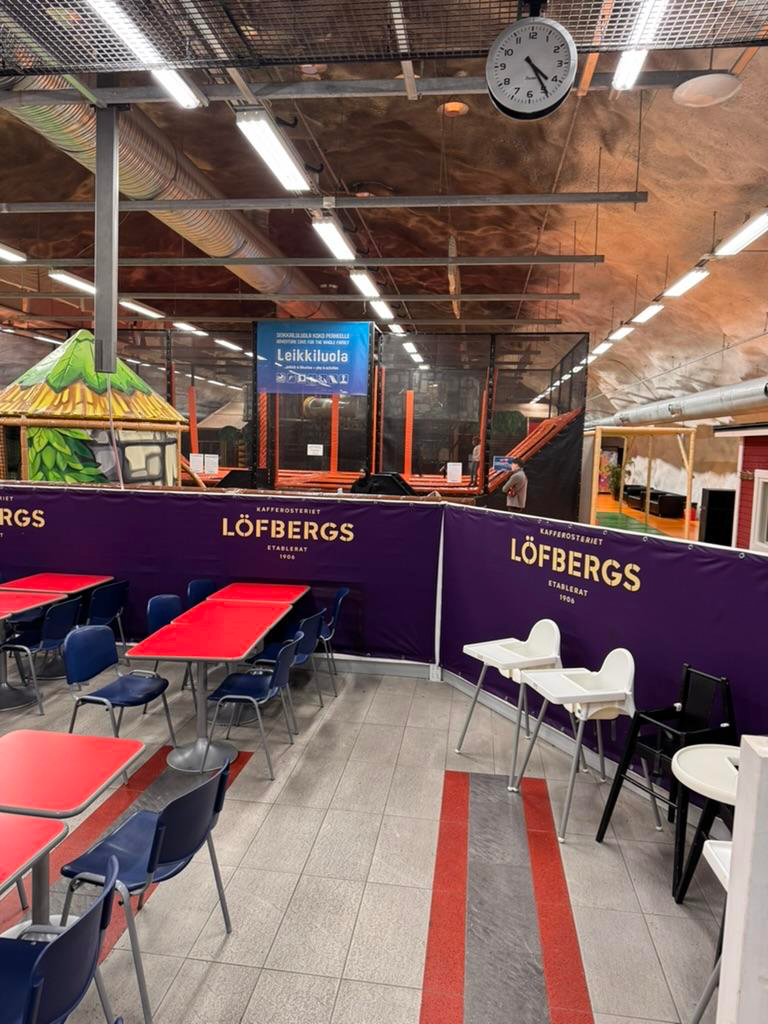
But universal access to support and resources across the life course is not an abstract value or a pollyanish, utopian vision for our hosts. Instead, it is a pragmatic, activating principle. Deep in a bunker beneath Helsinki, we learned how social care and healthcare are integral to Finland’s “comprehensive security,” not as an aside or afterthought but as a key pillar for national security and resilience, with plans in place to continue school, recreation, art, and the care people are accustomed to above ground, in the bunkers below if forced there by an aggressor. While there is talk of universal access and a focus on a society that works for everyone, it is also rooted deeply in pragmatism.
Those struggling or at vulnerable periods of their life (i.e., caregiving at the beginning and end of life) are the concern of not only the health and human services sector, but also security and defence, business, arts and culture. The welfare of people, whether struggling or not, is institutionalized across the many dimensions of society. Not as charity, but as a foundation. Not as an outcome of fragmented services to a selected and worthy few, but as a design for everyone and as we learned in Denmark, with conscious decisions to decommodify services that benefit the whole.
This mirror – the combination of the mutual, the holistic, and the pragmatic – reflected back the limitations of my own thinking and imagining, conditioned by scarcity and the othering it fuels. I like to think that I don’t participate in othering, but quite frankly my thinking has been so conditioned by our residual system that sometimes with the best of intentions and far too many times on autopilot, I have flattened people to their most urgent basic needs. I clearly remember thinking, “why are we spending time and energy on art and a soccer league for homeless people, when we should focus all of our attention and resources on housing?” as if it had to be either/or instead of both/and. And as if the person in front of me didn’t need or deserve exercise, beauty, and connection with others while waiting for available housing.

Now I should be clear, we do not have sufficient designated resources in the U.S. to provide for basic needs. Those who work in human services work in constant and persistent scarcity and the crises resulting from it – it is hard facing your job each day when you know there will not be enough resources now or for the foreseeable future for the family you are working with to exit homelessness, much less thrive. It takes a toll and it’s understandable that people are suspicious of a creative program or little library as the next cure all. A program can’t replace the deep societal commitment we saw on this trip.
But we also cannot limit our current and future planning, our leadership and our imagination to one dimension of care or we have been trapped by the same system that forces a game of musical chairs for basic needs and we perpetuate the system built for fragmentation and othering. People are more than their hunger, their housing status, their limited incomes, their chronic health and mental health conditions, no matter how pressing those challenges are for them. People with these lived experiences are often the first to remind you that they are not the hardship they are experiencing.
And a huge lesson of this trip for me is that when we flatten people to their hardship and we limit our thinking about programs to simply distributing insufficient existing resources, we leave a whole range of solutions on the table that we know build whole lives, whole communities, and a more resilient society.
Truthfully, I’m not sure exactly what to do with all the lessons of this trip in our U.S. context. There is a distance between what we saw on the trip and the real challenges we face in our U.S. context. And even in the countries we visited, whose residents actually seem proud to pay taxes(!), the work is hard – these are countries facing the increasing costs of their social welfare systems, slower growth, and the challenges of migration and xenophobia. We heard Finnish NFL standout Michael Quarshie remind us of the othering that takes place even in a society that is more structured for belonging. Regardless of the location, it is contested work in progress. I’m not sure of the solutions, but I am sure it is not either/or – either scarce basic needs or whole lives.
Personally, the trip reminded me that I must mind my thinking and my imagination and look both beyond the national context and paradoxically, look deep within my own context for grounding. How often we are shaped by the resources available to us rather than the sacredness, possibility, and belonging of the people before us – how can I look beyond what we have to who we are? I’m profoundly grateful to The Gambrell Foundation for the mirror of this experience, to the hosts for their thoughtful curation of speakers and experiences, and to my fellow travelers for the questions, discussion and side conversations that helped me see my own reflection more clearly.