A Good Life · November 9, 2026
Can you be deeply worried about the future and still believe in what’s possible?
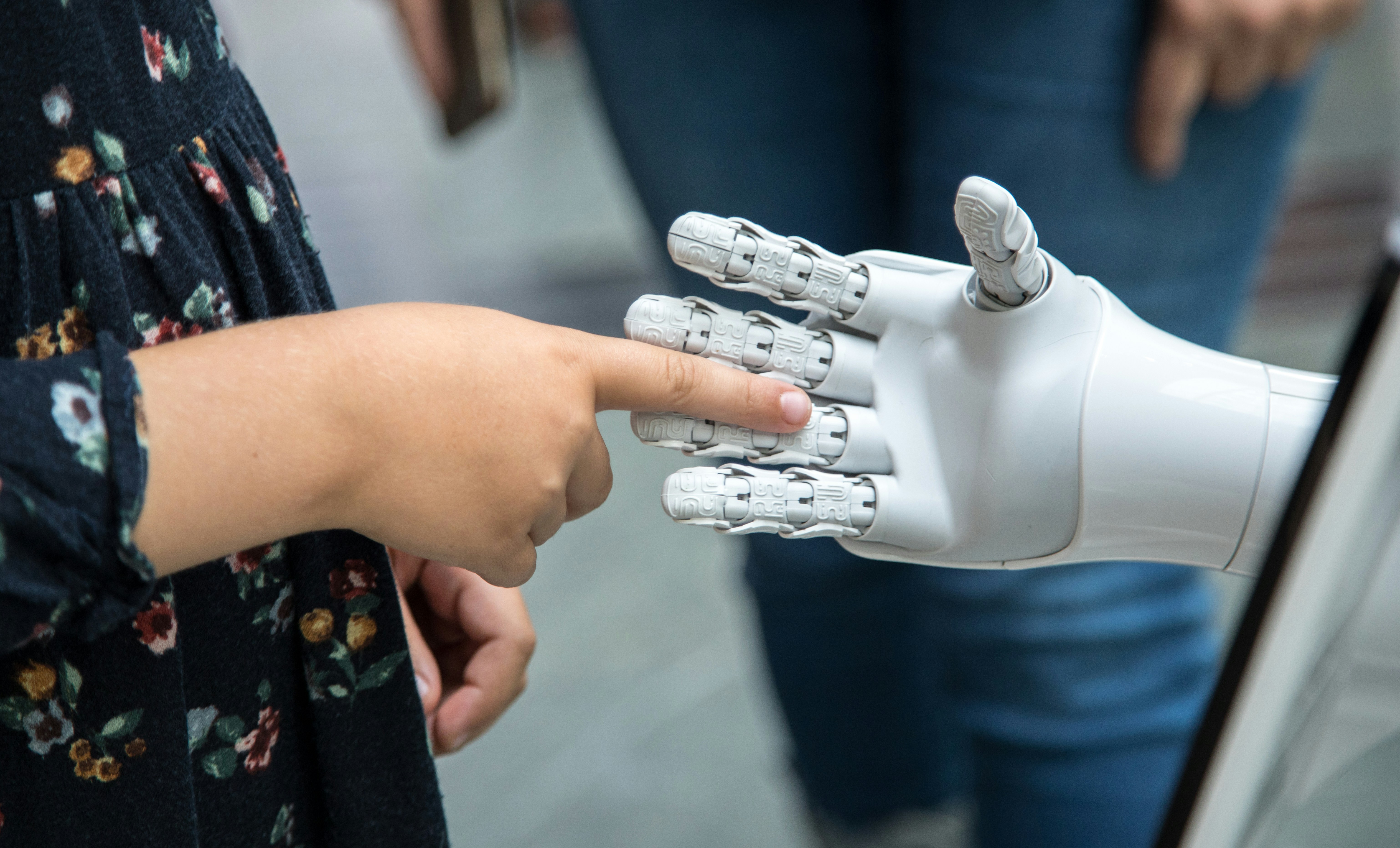
I recently watched The AI Doc: Or How I Became an Apocaloptimist, and I haven’t stopped thinking about it.
As a mother, I wonder, “What is the world going to be like for my children and grandchildren?” And as someone who spends a lot of time thinking about well-being and what makes a good life possible for all of us, I find myself asking an even bigger version of that question. AI has made it feel more urgent, more complicated, and much harder to answer.
What I appreciated about this film is that it refuses to give us the easy answer.
If you believe AI is going to make everything better, the film asks you to sit with some very real concerns.
What happens when systems become more powerful faster than we can understand or govern them?
What happens to jobs and economic opportunity if enormous productivity gains are concentrated in too few hands?
How do we think about deepfakes, manipulation, privacy, or technologies capable of influencing children in ways we may not fully anticipate?
And who is accountable when the people building these systems themselves acknowledge how much we still do not know?
Those are not questions I think we can afford to dismiss as fearmongering.
But if you believe AI is all doom and gloom, the film makes that position difficult to maintain too.
We are already seeing glimpses of extraordinary possibility in science and medicine. AI can help researchers understand patterns in biology, accelerate discovery, improve our ability to detect disease, and potentially expand access to education and healthcare in ways that would have been unimaginable not long ago.
There is a version of this future that could be incredible, and that tension is what makes the film so compelling.
The same intelligence that can help us solve extraordinarily difficult problems can create extraordinarily difficult new ones. The same technology can expand human possibility or diminish human agency. And the outcome is not predetermined.
I was so moved by the film that I immediately sent it to Rutger Bregman, because the questions underneath it feel much bigger than technology.
- Who do we want to be as this future arrives?
- Who gets to shape it?
- Whose interests are represented?
- What values are guiding the people making decisions that could affect nearly every part of human life?
And the question I keep returning to most: Who is going to wrangle all of this?
I want the best minds in the world working on AI, but I also want our strongest moral thinkers, policymakers, scientists, educators, parents, artists, and citizens in the conversation too.
Because technical intelligence alone is not enough. We need wisdom about what we are building, why we are building it, and who we want it to serve.
That is where being an “apocaloptimist” resonates with me. It isn’t blind optimism that ignores the risks, and it isn’t fear that leaves us paralyzed, but the willingness to hold the promise and the peril at the same time, and then accept that we have a role in determining what happens next.
That was perhaps the most important part of the film for me. It doesn’t leave us with anxiety. It leaves us with responsibility.
A responsibility to learn enough to participate in the conversation, to ask harder questions of the companies developing these technologies, and to support transparency and independent evaluation so we aren’t simply asking the people building AI to grade their own homework.
It’s also a responsibility to pay attention to how AI is being introduced into our workplaces, schools, healthcare systems, and children’s lives, and perhaps most importantly, to resist the idea that this future belongs only to technologists.
It belongs to all of us.
The filmmakers have even created resources to help people move from watching to acting, with ways to explore the issues that matter most to you, from jobs and education to healthcare, privacy, childhood, creativity, safety, and human agency.
As a mother, that makes me feel more hopeful, not because I walked away convinced everything is going to be fine. I didn’t.
But I walked away convinced that the future is still being shaped, and that this is precisely the moment when more of us need to help shape it.
I can’t remember the last time a documentary left me wanting to call so many people and say, “You have to watch this.” So, you have to watch this!
Watch The AI Doc: Or How I Became an Apocaloptimist. Then don’t stop at watching.
Learn. Question. Talk about it. Decide what matters to you. And find a way into the conversation.
Because if this technology is as consequential as the people building it believe it will be, none of us should be content to remain spectators.